THE ART OF HARDWOOD RESTORATION
Repairing Hardwood Floors: What Homeowners Should Know
Hardwood floors are built to last, but everyday wear, moisture,
moving furniture, and years of foot traffic can leave their mark.
The good news is that many hardwood flooring problems can be
corrected without replacing the entire floor.
The right solution depends on the condition of the wood,
the extent of the damage, and whether the problem affects
the surface or the floorboards themselves. Understanding
the difference between repair and refinishing is the first
step toward restoring your floors.
UNDERSTANDING YOUR OPTIONS
Hardwood Floor Repair vs. Refinishing
Although the terms are sometimes used interchangeably,
hardwood floor repair and refinishing address different
problems. Some floors need one approach, while others
benefit from a combination of both.
01 / REPAIR
Repairing Damaged Wood
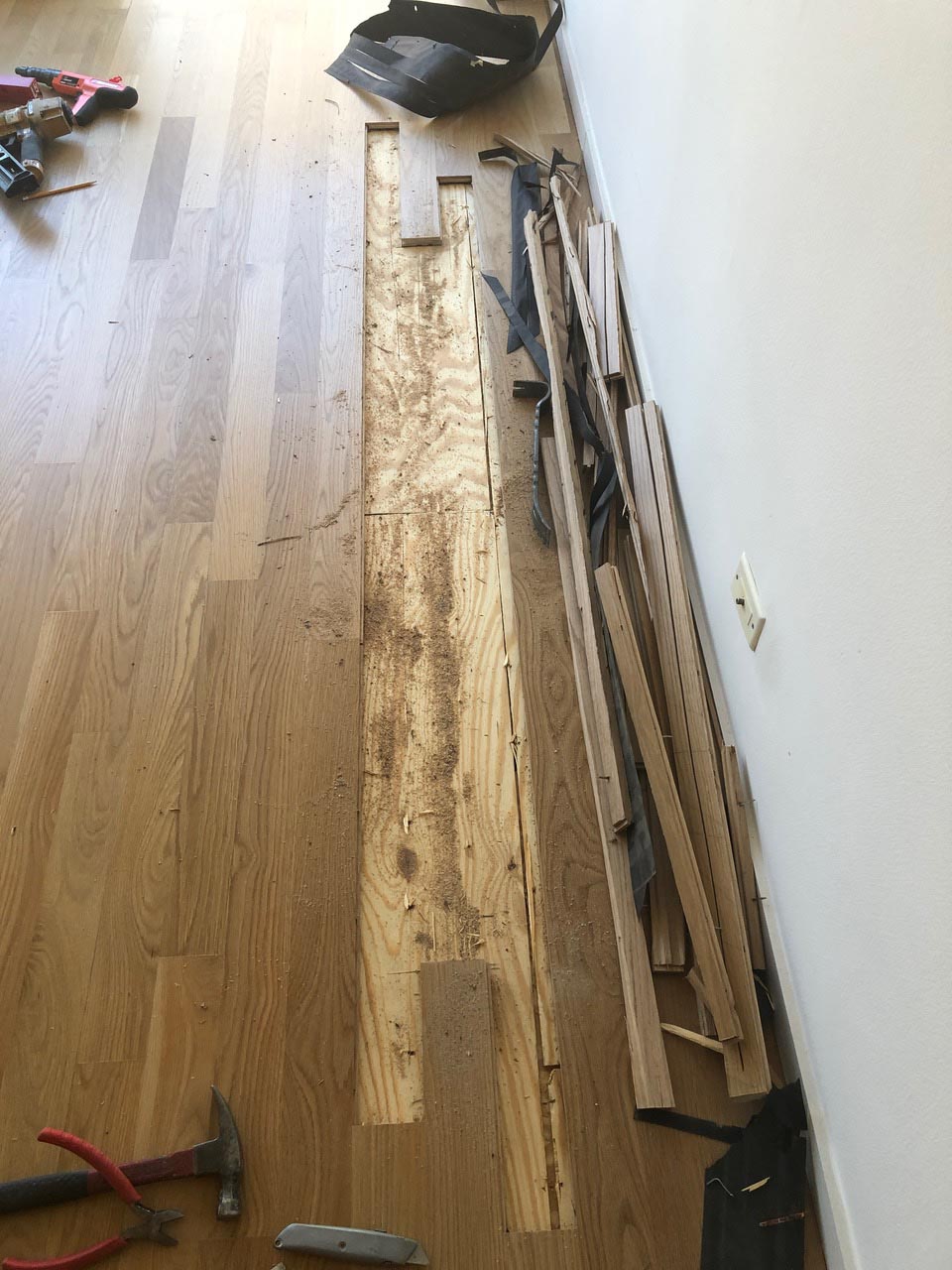
Repairs address specific problems such as cracked,
loose, cupped, or severely damaged boards. Depending
on the condition of the flooring, individual boards
may be repaired or replaced to restore a stable,
consistent surface.
02 / REFINISH
Renewing the Surface
Refinishing addresses worn finishes, discoloration,
and many surface scratches. Sanding and applying
a new finish can refresh the appearance of suitable
hardwood floors without replacing the boards.
Important: Deep water damage, structural
movement, and severely deteriorated boards should be
evaluated before refinishing. A new finish cannot correct
an underlying flooring problem.
COMMON FLOORING PROBLEMS
When Do Hardwood Floors Need Repair?
Some signs of damage are cosmetic, while others indicate
that a floorboard or the subfloor needs attention.
Common situations include:
-
Deep scratches and gouges:
Damage that extends into the wood may require more
than a simple finish touch-up.
-
Water-damaged boards:
Moisture can cause staining, swelling, cupping,
or permanent distortion.
-
Loose or squeaking planks:
Movement may result from fastening issues,
seasonal changes, or subfloor conditions.
-
Cracked or split wood:
Individual boards may need localized repair
or replacement.
-
Missing or badly damaged boards:
Matching replacement flooring can help restore
continuity in an existing room.
An experienced flooring professional can assess
whether localized repairs will be sufficient or
whether a larger restoration project is appropriate.
PRESERVING EXISTING HARDWOOD
Can Damaged Hardwood Floors Be Saved?
In many cases, yes. Solid hardwood flooring can often
be repaired and refinished, depending on its thickness,
previous sanding history, and overall condition.
The goal is to preserve as much usable original
flooring as possible while correcting damaged areas.
Matching existing wood requires attention to species,
plank width, grain, stain color, and finish sheen.
Even carefully selected replacement boards may initially
look different from surrounding flooring because wood
changes color naturally over time.
THE CRAFTSMANSHIP DETAIL
A successful hardwood floor repair is about more than
replacing a damaged board. Proper preparation,
careful fitting, and thoughtful finishing help
the repaired area blend with the existing floor.
THE RESTORATION PROCESS
What Happens During Hardwood Floor Restoration?
Every floor is different, but a typical restoration
begins with evaluating the damage and identifying
its cause. Addressing moisture or movement before
cosmetic work helps prevent recurring problems.
-
Inspect the floor.
Determine which boards can be preserved and
which areas require repair.
-
Correct the underlying issue.
Address moisture, loose boards, or other
conditions contributing to the damage.
-
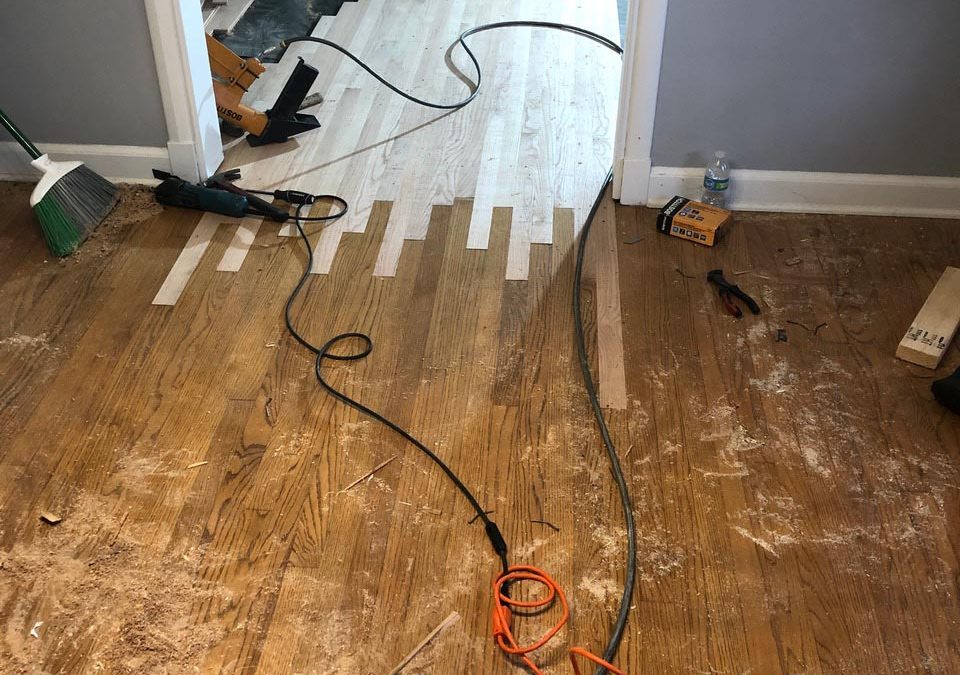
Repair or replace affected boards.
Select compatible materials and carefully
integrate them into the existing floor.
-
Prepare and finish the surface.
Where appropriate, sand and refinish the floor
for a more consistent appearance.
For floors that are structurally sound but have
a worn surface, learn more about our
dustless hardwood floor refinishing
process.
REAL-WORLD HARDWOOD RESTORATION
See a Hardwood Floor Repair Project
Real restoration projects show how damaged flooring
can be addressed while respecting the character
of the existing wood. From individual board repairs
to larger restoration work, the details matter.
EXPLORE OUR WORK
Hardwood Floor Repair Project
View a real flooring restoration project.
→
Protecting the Beauty of Your Hardwood Floors
Hardwood floors develop character over time, but
damage does not always mean replacement is necessary.
With the right repair approach, many floors can
continue providing warmth, durability, and natural
beauty for years to come.